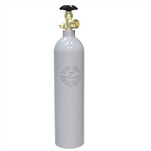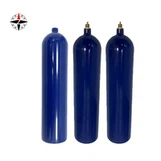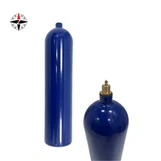


Image Aluminum Liquified Gas Cylinder 1
The majority of people are unaware of how commonplace and necessary aluminum has become in their everyday lives. Although many people associate aluminum with cans of soda or foil, the enormous variety and numerous advantages of aluminum alloys have had a profound impact on practically every sector. This also refers to the widespread use of aluminum liquified gas cylinders.
Aluminum industrial cylinders are non-magnetic, lightweight, and well-suited for both general usage and specialty gas applications.
Aluminum liquefied gas cylinders from Mid-Star are built of the high-strength alloy 6061-T6 and are produced in accordance with DOT-3AL and ISO standards. Aluminum is a fantastic option for any weight-sensitive application due to its reduced weight.
At Mid-Star Sales, we make sure that every cylinder is in compliance with the most recent international standards for valve design and performance. These aluminum cylinders are ideal for usage when the cylinders need to be moved often and are suited for a wide range of oxygen applications.


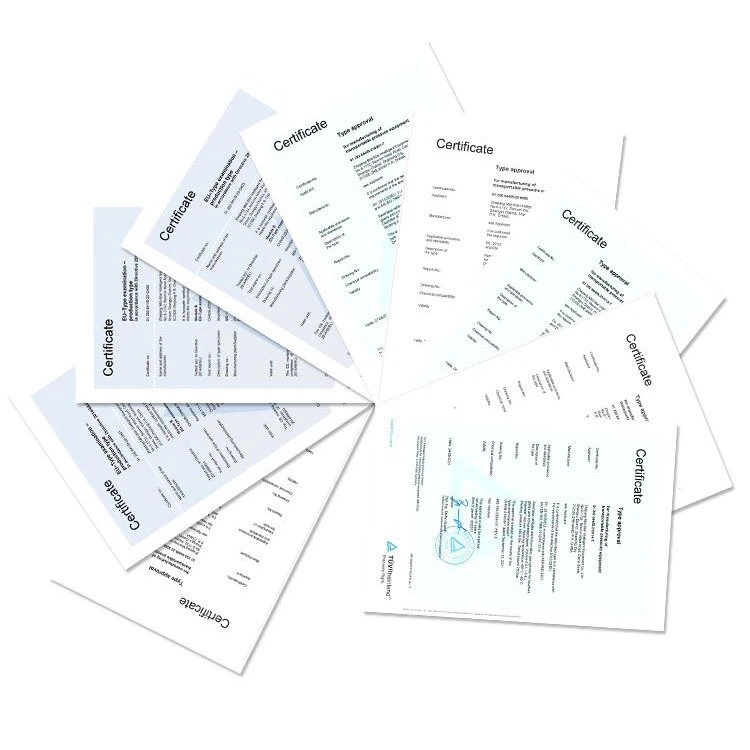


FAQs
Q: What is a liquid cylinder?
A: A cryogenic liquid cylinder contains valves for filling and distributing the liquid as well as a pressure release valve with a backup bursting disk. Dewars are non-pressurized containers that often have a loose-fitting lid or cap that lets out extra pressure.
Q: What does liquified gas mean?
A: Gases that are liquefied are those that are kept in cylinders under pressure at room temperature and in a liquid condition. Nitrous oxide, anhydrous ammonia, chlorine, propane, and carbon dioxide are typical examples of liquefied gases.
Q: Is liquified gas liquid or gas?
A: A gas that has been transformed into a liquid by cooling or compression is referred to as a liquefied gas (also known as liquid gas). Liquid air, liquefied natural gas, and liquefied petroleum gas are a few examples of liquefied gases.