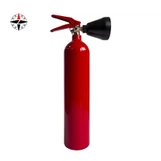


A wide selection of premium medical oxygen cylinders and packages are available from Mid-Star to serve a variety of sectors, including EMS, Marine + Offshore, and Industrial Safety. We can provide the cylinders empty or filled with medicinal oxygen. Cylinders have a 5-year hydrostatic test capacity and a 250BAR filling pressure built into their design. Oxygen cylinders are produced in China in accordance with or bettering DOT-3AL and ISO7866 specifications.
Our lightweight aluminum alloy inner cases for our medical cylinders give greater strength without significantly increasing weight. A considerably smaller and lighter aluminum cylinder can be used as an alternative to steel cylinders since it has a greater service pressure. These cylinders are ideal for situations where weight and mobility are crucial.
A manufacturer may choose to produce cylinders using any of the several steel kinds that are currently on the market. Yet, there are a few significant drawbacks to employing steel. Water often gets stuck in the cracks between places because it is so closely fitted and heavy. Because it leaves the steel vulnerable to corrosion, this is a major problem.


FAQs
Q:Which gas is used in cylinder in hospital?
A: Typically, pipelines supply medical air, oxygen, and nitrous oxide. Although it is more typical to be provided via portable cylinders, entonox is sometimes administered by pipeline at some hospitals.
Q:How should you identify a medical gas cylinder?
A: On the body, shoulders, and neck of gas cylinders are globally recognized marks and colours, as well as written labels or collars. Future cylinders will only have colour on the shoulder; this will be the accepted visual indicator of a cylinder hazard.
Q:What gas do surgeons use?
A: Nitrous oxide is frequently used in conjunction with halogenated anesthetics, such as sevoflurane and desflurane, to generate surgical levels of anesthesia.