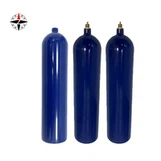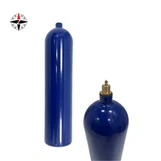


Image Nitrous Gas Tank 1
The least severe type of sedation is thought to be caused by nitrous gas, sometimes referred to as "laughing gas." When the time is right, your youngster may easily breathe in the solution because it has no smell and no colour because of the nitrous gas combination.
Your youngster won't be completely anaesthetized after receiving nitrous from a pediatric dentist in Mid-star. Instead, they will continue to be alert enough to react to Dr Ren's and his dental staff's cues. Your child won't feel the same things as someone under general anaesthesia, despite the fact that they could feel at ease or even drowsy.
Because nitrous gas is so light, it can be advantageous for your kid. As soon as the gas is shut off, the effects start to fade, allowing your child to resume regular activities. There are typically no adverse or long-lasting side effects.



FAQs
Q: When is the best time to use nitrous?
A: Only with the throttle wide open (unless a progressive controller is used). You will often get the finest results at early activation, traction allowing, because of the enormously enhanced torque. Nitrous may be used safely over 2,500 RPM when the throttle is fully open.
Q: How is nitrous oxide used in everyday life?
A: In dental or medical surgery, colorless gas (N2O) is utilized as an anesthetic or analgesic. Its nickname, "laughing gas," refers to the exhilaration it causes. In the production of foods under pressure, it is also employed. In the processing of foods under stress, it is also employed.
Q: What elements make up nitrous oxide?
A: Nitrous with oxygen. One of the numerous nitrogen oxides, nitrous oxide (N2O), also known as dinitrogen monoxide, laughing gas, or nitrous, is a colourless gas with a pleasant, sweet smell and taste that, when breathed, causes insensitivity to pain along with moderate hysteria and frequently laughter.