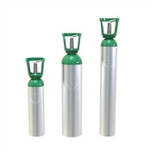


With the wide application of oxygen pressure relief valves, we must first understand some precautions for the use of oxygen pressure relief valves. The oxygen decompression valve is connected with the oxygen aluminum bottle, which is a special device that automatically reduces the working pressure of the pipeline. It uses the opening degree of the opening and closing parts in the valve body to adjust the flow of the medium to reduce the pressure of the medium. The role of pressure adjusts the opening of the opening and closing parts, so that the pressure behind the valve is kept within a certain range, and the outlet pressure value is kept within a certain range when the inlet pressure is constantly changing. Oxygen decompression valve can adjust the high-pressure gas in the gas cylinder to the practical pressure at will, and it is used as a gas cylinder decompression device for use. It is mainly used in welding, cutting and chemical, medical and health, and electronic industries. The oxygen pressure reducer can guarantee a stable output pressure regardless of changes in input pressure and output flow.
Precautions for the use of oxygen pressure reducing valve:
1. When using, first turn on the main switch of the gas cylinder, and then turn the pressure adjustment screw of the low pressure gauge clockwise to compress the main spring and drive the diaphragm, spring pad and ejector rod to open the valve. In this way, the imported high-pressure gas enters the low-pressure chamber after being throttled and decompressed from the high-pressure chamber, and leads to the working system through the outlet.
2. Turn the adjusting screw to change the opening height of the valve, so as to adjust the passage of high-pressure gas and achieve the required pressure value.
3. All pressure reducing valves are equipped with safety valves. It is a device to protect the pressure reducing valve and make it safe to use, and it is also a signal device for the failure of the pressure reducing valve. If the outlet pressure rises by itself and exceeds a certain allowable value due to valve pad, valve damage or other reasons, the safety valve will automatically open to exhaust.
4. Precautions for installation and use of oxygen pressure reducing valve:
(1) According to the different requirements of use, there are many specifications for oxygen pressure reducing valves.
(2) When installing the pressure reducing valve, it should be determined whether its connection specifications are consistent with the joints of the gas cylinder and the system used. The pressure reducing valve and the gas cylinder are connected by a hemispherical surface, and the two are completely matched by tightening the nut. Therefore, when in use, the two hemispherical surfaces should be kept clean to ensure a good airtight effect. Dust can be blown off with high-pressure gas before installation. Materials such as polytetrafluoroethylene can also be used as gaskets if necessary.
(3) The oxygen pressure reducing valve should be strictly prohibited from contacting grease to avoid fire accidents.
(4) When stopping work, the remaining air in the pressure reducing valve should be released, and then the adjusting screw should be loosened to prevent the elastic element from being deformed under pressure for a long time.
(5) The pressure reducing valve should avoid impact and vibration, and should not be in contact with corrosive substances.
5. Notes on other gas pressure reducing valves:
For some gases, such as nitrogen, air, argon and other permanent gases, an oxygen pressure reducing valve can be used. But there are also some gases, such as corrosive gases such as ammonia, which require a special pressure reducing valve. There are special pressure reducing valves for nitrogen, air, hydrogen, ammonia, acetylene, propane, water vapor and so on. The use methods and precautions of these pressure reducing valves are basically the same as those of oxygen pressure reducing valves. However, it should also be pointed out that special pressure reducing valves are generally not used for other gases. In order to prevent misuse, special connection ports are used between some special pressure reducing valves and gas cylinders. For example, both hydrogen and propane use left thread, also known as reverse thread, special attention should be paid to installation.