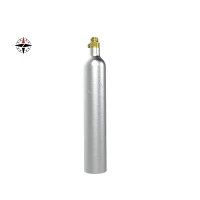


Precautions in the use and management of oxygen cylinders
Filling beyond the inspection period. Oxygen cylinders are valid for 15 years, and must be inspected once every 3 years, and can only be used after passing the inspection. Its purpose is to find out the safety status of the oxygen cylinder in time, find defects and hidden dangers in time to avoid accidents. However, the phenomenon that oxygen cylinders are filled beyond the inspection period in use is relatively serious, which brings serious hidden dangers to safe use.
Accessories are damaged or lost. There are cylinder valves, handwheels, bottle caps and shockproof rubber rings in the accessories of oxygen cylinders. The bottle cap is to prevent the valve of the gas cylinder from being hit and damaged during the handling process, or even broken to cause the gas to be ejected at high speed, pushing the bottle valve and the hand wheel to fly forward at high speed and causing casualties. The anti-vibration ring is a protective device to prevent the cylinder from being impacted, and requires a certain thickness and elasticity. However, in actual use, there are very few oxygen cylinders with complete accessories. Most of them do not have bottle caps and handwheels.
sun exposure. Gas cylinders should be transported, and should be protected from direct sunlight when used in summer. Because the volume of the oxygen cylinder is limited, exposure to the sun will increase the temperature of the medium in the cylinder, resulting in a sudden increase in the pressure in the cylinder, putting the cylinder in a dangerous state. Some users did not take sunshade measures during transportation, and exposed the oxygen cylinders to the sun when using them in summer. Especially in summer, the road temperature often reaches more than 40 degrees. If the gas cylinder itself is defective, overfilled or collided with each other, explosion accidents may occur.
The safety distance is not enough. The oxygen cylinder must be kept 10 meters away from the open flame when used, and it is strictly forbidden to store it in the same room as the acetylene cylinder during storage. Many users ignore this requirement, and there is a phenomenon that the distance between the oxygen cylinder and the welding point is less than 10 meters during the welding operation, and the oxygen cylinder and the acetylene cylinder are stored in the same room. Once the gas cylinder leaks and explodes in case of an open flame, it will cause irreparable losses.
Brutal loading and unloading. During transportation and use, the phenomenon of rough loading and unloading is very common. For example, during short-distance transportation, oxygen cylinders are pushed down forcefully and then rolled along the ground; vehicles are not fixed firmly during transportation, gas cylinders collide with each other, and are directly pushed down from the vehicle, etc. . For example, an oxygen factory in a certain city uses a car to transport oxygen cylinders to a certain enterprise. When unloading the car, the oxygen cylinder is pushed down and hits another cylinder, causing the two cylinders to explode at the same time.
Overpack. Oxygen cylinders are overfilled due to violation of operating procedures or operational errors during filling, which increases the pressure inside the cylinder and exceeds its allowable stress, and finally explodes due to excessive plastic deformation.


FAQs
Q:What is the oxygen content of a size E cylinder?
A:An oxygen-filled e-cylinder has a service pressure of 1900 psi. One e-cylinder holds 660 litres of oxygen.
Q:How much PSI does a full oxygen tank have?
A:About 2000 psi will indicate a full cylinder. The gauge reaches your doctor's recommended flow rate.
Q:How long is the lifespan of an e-cylinder oxygen tank?
A:Up to 2200 PSIG of pressure can be applied to oxygen cylinders. A full E-cylinder will give 22 hours of gas flow at a flow rate of 0.5 L/min.