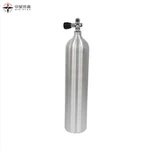


Image Scuba Air Tank 1
Scuba Air Tank can realize an ordinary person's diving dream. Aluminum bottle body with no accessories M25x2 bottle neck thread. The compressed gas bottle with an operating pressure of 174.8 bar may be used in the same way as the 1 liter diving bottle. Only for scuba divers and technical divers who want to extend their dives somewhat by using a pony bottle or a tiny stage bottle for oxygen in the rebreather. This bottle has enough argon to fill the drysuit for two to three hours of diving.
As used in a rebreather, it increases the rebreather's service life by approximately 30% when compared to a 1 liter bottle of compressed gas. Of course, we can also provide you with the appropriate diving cylinder valves. You have the option of using an S-valve for compressed air, an SH-valve for compressed air, an S-valve for nitrox, or an SH-valve for nitrox. Scuba tanks are subject to operating safety rules, regardless of whether they are built of steel or aluminum.
Compressed gas bottle with bottle neck thread M25x2mm
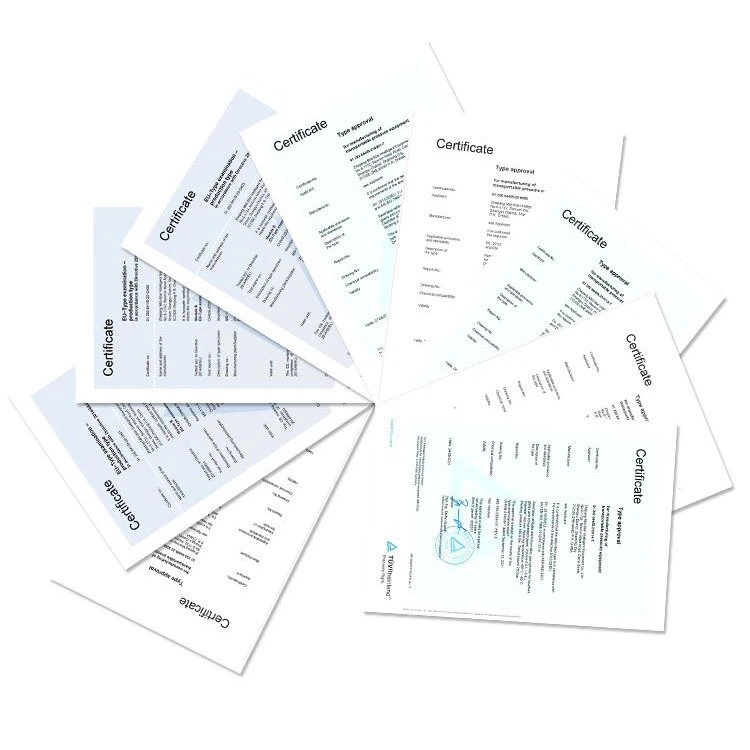
Type test according to EU directives
Bottle can be used as a diving bottle, compressed air bottle, oxygen bottle or argon bottle
Spray galvanized, painted
Product Specification




FAQs
Q: What cylinders require an interior inspection before MIDSTAR SCUBA will fill them?
A: Our fill station operators are trained to perform a cursory examination of each cylinder before it is filled. We require an interior inspection whenever we encounter a cylinder.
Q: Does MIDSTAR SCUBA require an eddy current test on all aluminum cylinders before filling?
A: Yes. We require an eddy current exam on all cylinders made from aluminum alloy.
Q: Why do aluminum cylinders made from the 6351-T6 alloy require an eddy current test?
A: This specific alloy has a history of sustained load cracking (SLC), which can cause a cylinder to fail. Aluminum SCUBA cylinders built between 1982 and 1983 require special attention since the alloy used at the time, 6351-T6, had a greater lead concentration, making the cylinder more prone to SLC. By 1990, the aluminum cylinder industry in the United States was employing a new alloy known as 6061-T6. There are no signs that the 6061-T6 alloy has SLC issues, and no steel cylinder has ever had SLC issues.