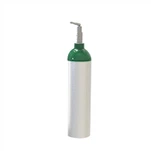

Gas cylinders are used to hold various gases at very high pressures and can be very dangerous to handle without proper training. It's also important to know how to safely release gas from a cylinder, as releasing it too quickly can actually cause the cylinder to burst or turn into a rocket, potentially causing very serious injury or even death.
As you know, there are many factors that affect proper cylinder handling and use. That's why in this blog post, we'll cover some of the cylinder basics and safety improvements that have been implemented over the years to further prevent injuries related to workplace improvements.
How the cylinder is built
In order to understand the importance of high pressure gas cylinders, understanding the context in which they are manufactured will give you an insight into the complexities and all the variables of compressed gas storage and technology.
The entire process begins by dipping heated steel discs in a chemical mixture that will help the metal become pliable. They are then drawn through a process called "deep drawing," using a large mandrel press to push down the disk with forces of up to 800 tons, forming the disk into a cylindrical shape. Since the cylinder is made from one piece of metal, this makes the cylinder seamless, which is essential for safety reasons.
Once the shape is formed, it stretches the cylinder a second time using a force of up to 250 tons. During this process, coolant is sprayed on the cylinder so that it doesn't overheat as it stretches.
The cylinder is then "stretched" a third time, creating a concave surface at the bottom of the cylinder to reinforce the bottom of the cylinder. Then, cut about 10 cm from the top of the cylinder to make the top of the cylinder. The part is heated to very hot temperatures, attached back to the bottom of the cylinder, and then shaped through a hot spinning process to create the curved top and neck of the cylinder.
Once the cylinder is made, it is heated to 1,652 degrees Fahrenheit, then immersed in a chemical bath, reheated at a lower temperature, and then cooled again. This tempers the metal of the cylinder, making it stronger and more flexible. The grove you screwed into the valve is then shaped, and the cylinder must then be cleaned through a process called shot peening. Shot blasting essentially ejects tiny particles at high velocity into the cylinder, eliminating any excess buildup during assembly.
The cylinders were then tested by filling them with water, then immersing them with additional pressure to see how well they would hold up. After the test, the machine prints the desired label on the cylinder, such as the date of manufacture. Finally, attach a steel sleeve to the top as well as the valve, then send the cylinder out and finish the paint job.
Label
Since working with compressed gas can be very dangerous, it is important to have proper labels to identify the type of gas (flammable, non-flammable/non-toxic, oxidizing or toxic) and any risks associated with it. Cylinders need to have specific labels, including:
Cylinder serial number
manufacturer date
neck ring logo
Check mark
point number
tare
gas content inside
Never make any modifications to the markings on the cylinders as they are usually leased from a supplier, it is important to know when each cylinder should undergo another inspection/test and what each cylinder contains what.
security improvements
It is important to keep the gas inside each cylinder stable so that the gas mixture retains its composition. There can be many reasons why the stability of the gas in the cylinder may change. This can be caused by changes in temperature, storage time, gas reaction and pressure. According to CPV Manufacturing, steel cylinders are the most commonly used metal for gas cylinders, but aluminum cylinders are popular for their light weight and portability. Various cylinder tests and treatments give aluminum cylinders credibility to provide a more stable environment for certain reactive gases.
Some cylinder manufacturers are constantly testing new ways to improve their cylinders for maximum efficiency and durability. According to an article by Gasworld, Worthington Industries from Columbus, Ohio, applied a powder coat to their gas cylinders, which helped significantly improve the durability and longevity of their cylinders.
Cylinder test
Cylinder testing may seem like a routine check to make sure the cylinder is still in working order, but testing can provide more insight into how to improve gas stability and safety. Companies are always looking for new ways to improve cylinder technology and gas safetyly basis. Some of those techniques include washing or polishing the inside of the cylinders, baking cylinders to ensure there isn’t any moisture present and to remove any potential contamination, and regular testing to achieve optimal gas stability.
Here are Air Source Industries, we provide cylinder testing services like shot-blasting and hydro-testing. As we mentioned, shot-blasting is done to clean the outside of the cylinder and remove any grit. Hydro-testing is done to ensure there aren't 't any leaks in the cylinder wall and to test the strength of the cylinder as well. A small leak can cause serious issues or injuries in the workplace, so making sure that the cylinders are inspected regularly keeps you and your cylinders safe.