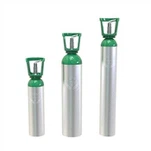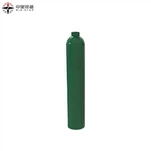

Can standard gas cylinders be filled with different gases? This depends on the circumstances.

Let's look at standard gas cylinders first. Standard gas cylinder valves are generally available in copper and stainless steel. Copper valves are suitable for stable, non-corrosive and weakly corrosive components, while stainless steel cylinder valves are suitable for highly corrosive and reactive components. Why this distinction?
If a copper valve is used for corrosive components, the cylinder valve may corrode over time, leading to leaks and a safety hazard. The active ingredient reacts easily with copper and if a copper valve is used, the concentration of the active ingredient may decrease or other impurities may occur. For example, a copper valve is sufficient for standard CO2 gases, while a stainless steel valve is required for standard SO2 gases.
Let's look at the interface of the cylinder valve. The interface thread is usually W21.8"-14RH, W21.8"-14LH, G5/8" R means that the interface thread is right-handed and L means that the interface thread is left-handed. So why are there so many different types of fittings? The main reason is to differentiate between the gases contained in the gas cylinders.
Type of gas Valve connection type
Non-flammable, non-toxic W21.8"-14RH, W5/8 "R
Flammable, toxic W21.8"-14LH, W5/8 "L
The distinction between flammable and non-flammable, toxic and non-toxic cylinders by means of left-hand and right-hand threads prevents the mixing of different components due to incorrect cylinder connection and thus prevents safety accidents.
In summary, cylinder differentiation plays an important role in the safe and correct use of standard gases. Therefore, it is important not to use one and the same cylinder for several purposes, but to check each case on its own.