

Generally speaking, industrial gases are widely used in various fields of industrial production, national defense technology and people's life. Common industrial gases refer to oxygen, nitrogen, argon, neon, helium, krypton, xenon, hydrogen, carbon dioxide, acetylene , natural gas, etc. Steelmaking, ironmaking, non-ferrous metal smelting, fertilizer production, ethylene, propylene, polyvinyl chloride, rayon, synthetic fiber, etc. are the most common uses of industrial gases, and there are also fuels and superconducting gases similar to those in the defense industry. Materials production, electronics, semiconductors, fiber optic production, agriculture, animal husbandry, and other emerging industrial gas uses are being developed. Next, let's take a closer look at the uses of several common industrial gases!
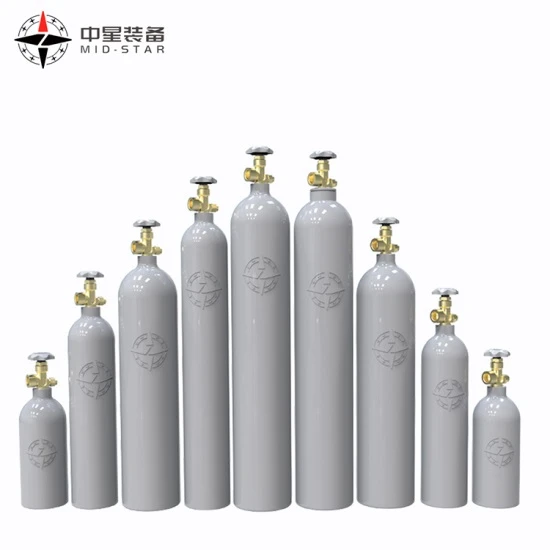

Oxygen is the earliest industrial gas developed and applied, and it has been widely used in various fields of national economy and social development. It is mainly used as combustion-supporting gas for metal welding, cutting and various combustion devices, as well as oxidizing gas for certain processes. High-purity oxygen is used in the electronics industry. In addition to being used as a combustion aid, it is also an oxidizing gas for the manufacture of semiconductor integrated circuits. It is one of the indispensable high-purity gases in this industry; high-purity oxygen is also an important gas raw material for the manufacture of optical fibers. Oxygen has a wide range of uses in national defense, and rockets are the most used. In addition, the market scope of liquid oxygen is also very wide. According to statistics, the market share of liquid oxygen in the United States in 1999 was: machinery 16%, metal 14%, health care 13%, electronics 12%, welding 10%, transportation 10%, and chemical industry 9%. , glass 5%, transportation services 2%, paper 1%, laboratories 1%, and others 7%. In addition, oxygen-blowing steelmaking has been widely adopted by various countries and has become an important way for the rapid development of the iron and steel industry. Oxygen consumption per ton of steel rolling is 3~6m3, steel processing, continuous casting slab flame cutting, flame removal, furnace lining flame oxygen consumption per ton of steel is 11.4~14.2m3.
Nitrogen is an inert gas with a maximum content of about 78% in air. With the development of science and technology, nitrogen is being widely used in all walks of life in the national economy. Nitrogen is mainly used as protective gas, purge gas, carrier gas, drying gas, etc. Also according to statistics, the liquid nitrogen market in the United States in 1999 was 22% for chemical industry, 20% for food, 16% for electronics, 7% for machinery, 6% for metal, 5% for oil and gas, 4% for petroleum, 4% for transportation, 3% for rubber, and 3% for laboratories. 3%, manufacturing 2%, other 8%. Nitrogen is mainly used in the synthesis of ammonia, from which fertilizers, nitric acid, and explosives are produced. Ammonia is also an important raw material for synthetic fibers (nylon, acrylic), synthetic resins, and synthetic rubber. Due to the chemical inertness of high-purity nitrogen, it is often used as a protective gas. In order to prevent some objects from being oxidized by oxygen when exposed to the air, filling the granary with nitrogen can prevent the grain from becoming moldy or germinating, and can be stored for a long time. Liquid ammonia can also be used as a deep cryogen.
Argon is a rare gas widely used in industry. It is very inactive in nature, neither burning nor supporting combustion. In aircraft manufacturing, shipbuilding, atomic energy industry and machinery industry, when welding special metals such as aluminum, magnesium, copper and its alloys and stainless steel, argon is often used as a welding shielding gas to prevent the welded parts from being oxidized or nitrided by air. The chemical properties of argon are used in the smelting of special metals: lithium, beryllium, uranium, plutonium, thorium, titanium, zirconium, hafnium, niobium, tantalum and other rare metals required by the space industry for reduction reactions. Argon was used as the ambient gas. During the refining of semiconductor materials silicon and germanium and the preparation of single crystals, argon is also used as the ambient gas to protect the growth of crystals. Argon is also used in the steel process: if argon is blown into the molten steel, the composition is uniform, the molten steel is purified, and impurities such as hydrogen, oxygen, and nitrogen dissolved in the molten steel can be removed to improve the quality of the billet. Argon blowing can also cancel the reduction period, shorten the smelting time, increase the output, save electric energy, etc.
Carbon dioxide has a wide range of uses, and its consumption is second only to oxygen. Carbon dioxide can be used to make carbonated drinks. As a fire extinguishing agent, carbon dioxide is widely used in the initial fire extinguishment of electrical equipment, precision instruments, valuable production equipment and books and archives. Carbon dioxide gas shielded welding can be widely used in the welding of various materials. Ammonia, especially the synthetic ammonia industry, is very important. The industrialized production of synthetic ammonia provides sufficient raw materials for the manufacture of various nitrogen fertilizers. Ammonia is also used in the production of various amine and acyl compounds, and a large amount of ammonia is also consumed in the production of explosives. Ammonia is a medium-temperature refrigerant suitable for large and medium-sized refrigerators, and it is the earliest and most widely used refrigerant. Ammonia is also a raw material for metallurgy, medicine and other industries. With the raw material gas of synthetic ammonia, various fertilizers can be produced. 1 ton of synthetic ammonia can produce 2-2.2 tons of ammonium nitrate, 3.8-4 tons of ammonium sulfate, and 1.5-1.7 tons of urea. Oxygen is used as a gasification agent for pulverized coal or heavy oil, and nitrogen participates in synthesis as raw material gas and as a safety protection gas for the device (99.99% pure nitrogen is required for coal protection).


