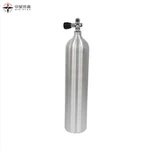


Small scuba tank for pool is an essential piece of equipment for all divers. The tanks store breathable air at extreme pressure and allow humans to breathe underwater. It puts the scuba in scuba diving.
Small scuba tank for pool, as you are aware, can get damaged or corroded. Because it is a critical, if not the most critical, component of your equipment, you must pay close attention to its condition. The restrictions may differ significantly depending on the nation, but the fundamentals are the same worldwide. If your cylinders are not technically operable and do not have the proper permissions, no diving facility will fill them.
Maintenance
A current pressure test confirmation is required for each cylinder. This validation is imprinted on the cylinder’s cup and must be repeated every five years. Furthermore, each cylinder should have visual inspection confirmation, which should be performed every year. So much for present legislation.
Furthermore, if you want the equipment to last a long period, you must maintain it. Wash the equipment completely with fresh water after each use, including the cylinder and its valve. Examine the valve o-ring to see whether it is damaged or just worn out. This is a common occurrence, and the o-ring should simply be changed.


FAQs
Q: Can scuba tanks be repainted?
A: Scuba tanks can be painted, indeed. However, it is advisable not to paint the scuba tanks. Scuba tanks should not be painted for a variety of reasons, including paint cannot withstand diving and salt water.
Q: How long does it take to empty a scuba tank?
A: The average air consumption of a diver in calm waters, at a depth of about 10 meters, can almost exhaust the air in the tank in one hour. Because it depends directly on the dive depth, the deeper you dive, the faster the air in your tank is consumed.