
Following Mallory and Irving's first Everest expedition in 1924, almost 97.1% of climbers chose to climb Mount Everest with the support of supplemental oxygen. Oxygen cylinders play a vital role for high altitude climbers, climbing Mount Everest without using any supplemental oxygen is rare at any time, and in more than 6,500 examples of summiting Mount Everest, complete There are less than 100 cases of climbing Mount Everest in such a pure way without using oxygen tanks. And as with all improvements in mountaineering technique and equipment, there have been many changes to the oxygen system.
In the 1950s, when Switzerland and the United Kingdom re-attempted Mount Everest, the technology was advanced on the basis of post-interwar oxygen systems. In 1953, nearly three decades after the first Everest attempt, the first team to successfully summit Everest, Sir Edmund Hillary and Tenzing Norgay Sherpa, came out with a greatly improved and lighter (22 lb/10kg) oxygen system peaks. In 1979, a major cause of the death of two mountaineers, Ray Genet and Hannelore Schmatz, on Mount Everest was a shortage of oxygen cylinder capacity.
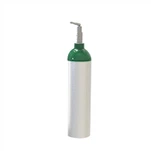
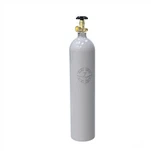
By the 21st century, one of the popular oxygen systems used on Mount Everest was the carbon fiber aluminum cylinder, an oxygen cylinder filled with 3 liters of oxygen at 3,000 psi and weighing 7 pounds.
Oxygen cylinders come in a variety of sizes, but they are all fairly heavy because they have to be made of material strong enough to withstand strong air pressures. It has to be carried on the back. At 8,000 meters above sea level, providing supplemental oxygen is not an easy task in the high winds and extreme temperatures. Frozen valves, masks deforming in the wind, icy pipes and more can prevent the right amount of oxygen from being delivered to climbers at the right time. Too much and it wastes precious oxygen, too little and it can make the climber unable to hold on or worse. The duration of the oxygen cylinder depends on the flow rate you set, the size of your physical energy consumption and the metabolic rate of your body, so there is no way to give the exact usage time.
The basic principle of use of all oxygen systems is almost the same, that is, the oxygen in the metal cylinder carried by the backpack is sent through the rubber tube to the oxygen mask covering the mouth and nose of the climber. A regulator attached to the top of the cylinder controls the flow of oxygen.
Oxygen inhalation is an important measure for the treatment of many altitude diseases. Whether the correct grasp of oxygen inhalation is directly related to the curative effect of oxygen inhalation and the occurrence of side effects. Just arriving at the plateau, everyone will feel chest tightness to varying degrees. Shortness of breath. Difficulties and other symptoms of hypoxia. In severe cases, there will be headaches, general muscle pain, insomnia and other symptoms. Oxygen inhalation is one of the important means of preventing and treating altitude sickness. Scientists call altitudes above 3,000 meters high altitudes. At high altitude, its climatic characteristics (such as low oxygen pressure, hypoxia, high radiation and high cold, etc.) are very different from those in plain areas. When people arrive in such an environment, the body must make a series of adjustments to adapt. Therefore. When entering the plateau for the first time, even those who have been living in the plateau returning to the plateau from the plain, must prevent the occurrence of acute altitude sickness in many aspects. Therefore, for those who have just entered the plateau area or those who want to climb the peak, it is necessary to correctly grasp the Oxygen method is required.
There are many ways to inhale oxygen in the plateau area. There are nasal cannula for oxygen, mask for oxygen, oxygen bottle, ventilator for oxygen, etc.
Today, I will specifically introduce the plateau oxygen cylinder and its correct use.
[Main structure of plateau oxygen bottle]: It is mainly composed of bottle body, oxygen inhalation tube, oxygen inhalation mask and regulator;
[Scope of application of plateau oxygen cylinders]
1. Prevention of altitude sickness: Inhalation of oxygen can prevent altitude sickness, high altitude pulmonary edema and other high diseases caused by hypoxia.
2. First aid for altitude sickness: It is used for the treatment and first aid of acute and critical altitude sickness such as altitude sickness, high altitude pulmonary edema and high altitude cerebral edema caused by altitude hypoxia.
3. Daily health care for plateau people: It is used for daily health care of all kinds of people who come to the plateau for tourism and work.
4. First aid and home oxygen therapy for patients with cardiopulmonary diseases: used for first aid and home oxygen therapy for patients with asthma, chronic bronchitis, angina pectoris, cerebral hemorrhage and other diseases.
5. Daily health care for pregnant women: It can significantly reduce various hypoxia symptoms of pregnant women due to pregnancy and promote the healthy development of the fetus.
6. Recover brain fatigue: used for dizziness, brain swelling, inattention, etc. caused by students and mental workers due to study tension and overuse of the brain.
7. Long-term driving: It can prevent the occurrence of unresponsive, dozing, etc. that affect driving safety during long-term driving.
【Instructions】
Method 1:
1.Connect the oxygen regulator and valve, and insert one end of the nasal oxygen tube or oxygen mask into the gas nozzle below the regulator;
2.Put on a nasal oxygen tube or oxygen mask, open the valve, and adjust the flow through the oxygen regulator.
3.The amount of suction can be controlled by the regulating valve. The valves are turned clockwise to open, and counterclockwise to close.
【Precautions】
1. It is necessary to inhale oxygen at a low flow. That is, it is advisable to maintain the oxygen flow at 2 to 4 liters per minute. This ensures that the oxygen inhalation is effective and avoids side effects as much as possible.
2. Aiming at the incidence of altitude sickness. The oxygen inhalation schedule is prioritized in the afternoon and evening.
3. Try to keep breathing oxygen every time. Don't stop breathing.