

How are oxygen cylinders stored and transported?
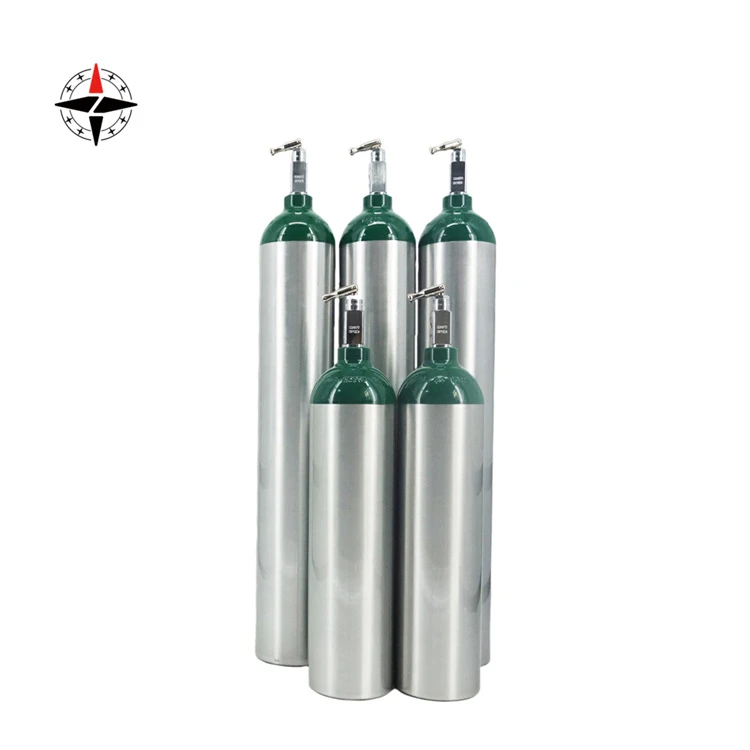
Oxygen cylinders generally explode, and the oxygen cylinder explosion is not a chemical explosion, but a physical explosion. A physical explosion is an explosion when the gas pressure is too high for the shell to withstand. There are generally two ways to increase the pressure, one is to fill the gas inside, and the other is to increase the temperature. However, due to the thickness of the oxygen cylinder, it is difficult to achieve the conditions for the oxygen cylinder to explode at home.
When oxygen cylinders are in use, why must prevent the cylinder dumping ? In such a way, once the oxygen cylinder valve drops off the gas, the oxygen cylinder will rush forward or spin on the ground due to the huge reaction force of the gas, and if someone is nearby, it will hurt people. Oxygen cylinder vertically placed use, if the gas will not appear this situation, began to feel a little mysterious, but the facts proved to be true, anti-dumping measures must be taken!!
First, oxygen cylinder storage precautions
1, sun protection: in summer to build shade, to prevent direct sunlight on the bottle;
2, rain: the storage point should be located at a high place to prevent rain and ground water resulting in bottle rust;
3, lightning protection: the storage point should be far away from the lightning rod and the lightning grounding device of tall buildings, should be kept at a distance of more than 10 meters;
4, anti-grease pollution: the storage point should be kept more than 10 meters away from the oil storage tank and barrel;
5, anti-static: storage points should be far away from overhead high-voltage lines and underground cables, to prevent cables in the fault state sometimes lead to greater accidents;
6, heat prevention: storage point should be away from the heating pipe, sheet, to prevent heat source radiation;
7, to prevent room collapse: storage points can not be built near the dangerous house or temporary house, but can not store compressed gas cylinders in the dangerous house;
8, fire prevention: storage point should be more than 10 meters away from the fuel storage point;
9, anti-corrosion: the storage point of the compressed gas cylinder should be away from the strong oxidation and corrosive substances, and set up fire equipment 3-5 meters away from the storage point.
Two, oxygen cylinder handling method:
1, the cylinder handling should use a special lifting rack or trolley.
2, the transport cylinder should be placed in a special semi-circular socket wooden frame; If there is no socket frame, each cylinder can be covered with a thickness of not less than 25 mm rope ring or rubber ring two, so as to avoid collision with each other.
3. The valves of all cylinders should face upward.
4, when the gas cylinder is transported by car, the gas cylinder is not allowed to be placed vertically along the carriage, and should be placed horizontally. Cylinder escort personnel should sit in the driver's cab, not in the compartment.
(5) In order to prevent the cylinder from rolling during transportation, it should be reliably fixed.
6, when transporting gas cylinders by car, carriage or railway open car, the canvas should be covered to prevent exposure to the scorching sun.
7. Whether it is inflated or empty, the safety cap on the bottleneck and the nut cap of the valve side connection head should be covered before transportation.
8. When transporting oxygen cylinders, it must be ensured that the cylinders are not contaminated with grease, asphalt, etc.


